Table of Contents

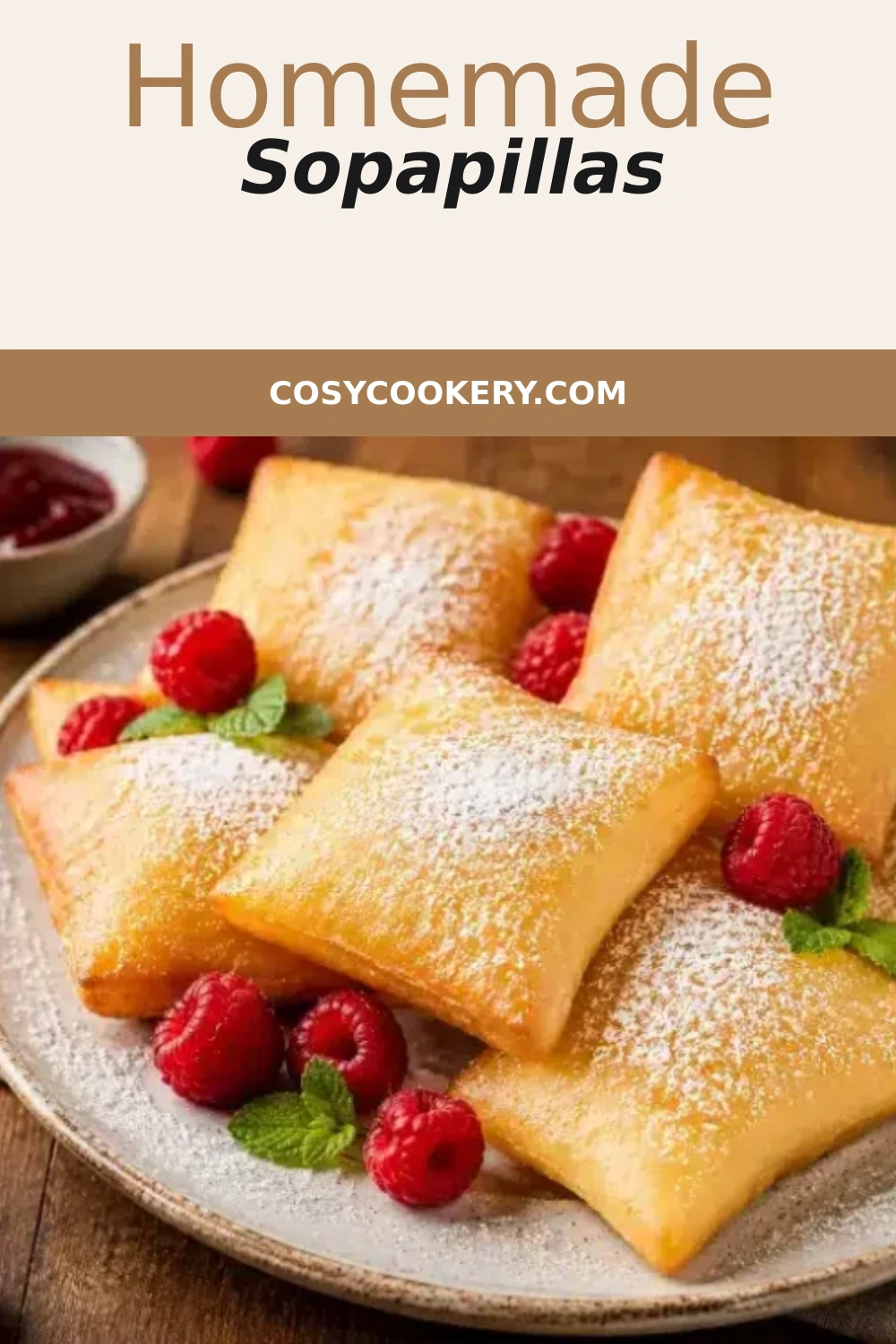
Homemade Sopapillas: The Ultimate Light & Fluffy Mexican Fried Dough
I’ll never forget my first bite of a perfect sopapilla — it was a sweltering summer afternoon in Marrakech. My mother had just returned from the market with fresh msemen (Moroccan flatbread), and I was craving something sweet and fried. Years later, trained at Le Cordon Bleu in Paris and now cooking in my tiny New York City kitchen, I set out to create the ultimate homemade sopapillas. My secret? Buttermilk and a touch of baking powder instead of yeast — this unique angle yields a lighter, fluffier dough that puffs up beautifully in hot oil. The result is a golden, pillowy fried bread that’s crispy on the outside and airy on the inside, perfect for drizzling with honey or stuffing with savory fillings.
Picture this: a warm sopapilla straight from the skillet, dusted with cinnamon sugar, and drizzled with local honey — the jam drips into every air pocket. The exterior shatters as you bite, revealing a tender, almost biscuity crumb. I often pair these with a dollop of Mexican crema and a sprinkle of sea salt, balancing sweet, tangy, and salty in one bite. Growing up, my mother would fold spices like cinnamon and anise into her dough, a nod to North African flavors. In this version, I bring that same warmth but streamline the process for busy weeknights. Whether served as a dessert, a snack, or even as a base for chilaquiles, the versatility of sopapillas is unmatched.
After testing dozens of variations — from yeasted to beer-based — I’ve landed on a foolproof method that works every time. 💡 Olga’s Pro Tip: The trick to perfect puffing is to let the dough rest for just 10 minutes after cutting, allowing the gluten to relax. A common mistake? Overworking the dough, which makes the sopapillas dense. In this blog, I’ll share my tested formula, substitution ideas for dairy or gluten-free diets, and how to store them so you can enjoy crispy sopapillas even days later. Trust me, once you try these, you’ll never reach for a mix again.
Why This Sopapilla Recipe Is the Best
The Flavor Secret: Buttermilk is the star here. It adds a subtle tang and tenderizes the gluten without weighing the dough down, much like the cultured butter we used in Parisian pastry. My Moroccan heritage taught me that a touch of warm spice — a pinch of cinnamon and cardamom — elevates the dough from plain to unforgettable. This combination, inspired by my mother’s chebakia (honey cookies), gives these sopapillas a depth you won’t find in typical recipes.
Perfected Texture: No yeast, no long rises. By using a chemical leavening system (baking powder + buttermilk), we create a dough that puffs rapidly in hot oil. I learned the importance of temperature control in Paris — oil that’s too cool causes greasy sopapillas, while too hot burns the outside before the inside cooks. Through trial and error, I landed on 350°F (175°C) as the sweet spot. The result: an even, golden crust and a tender, almost flaky interior that reminds me of the best scones from a NYC café.
Foolproof & Fast: This recipe takes just 20 minutes from start to finish, making it ideal for spontaneous cravings or last-minute guests. Because there’s no rising time, you can have warm sopapillas on the table faster than a pizza delivery. Even if you’ve never fried anything before, the detailed steps and visual cues — like waiting for bubbles to appear around the edges — guarantee success. Plus, the dough is forgiving: you can roll it thinner for extra-crispy sopapillas or thicker for puffier pillows.
Sopapilla Ingredients
When I shop for these ingredients at the Union Square farmers market or my local bodega in Brooklyn, I keep a few tricks in mind. Buttermilk can be substituted with milk + lemon juice, but for the best flavor, I recommend cultured buttermilk. Flour should be all-purpose — bread flour yields a too-tough chew, while cake flour makes them fragile. Here’s exactly what you need.
Ingredients List
- 2 cups all-purpose flour (250g), plus more for dusting
- 1 ½ teaspoons baking powder
- ½ teaspoon baking soda
- ½ teaspoon salt
- 1 teaspoon ground cinnamon
- ¼ teaspoon ground cardamom (optional, but recommended)
- 2 tablespoons granulated sugar
- 2 tablespoons unsalted butter, cold and cut into small cubes
- ¾ cup buttermilk, cold (well shaken)
- 1 teaspoon vanilla extract
- Vegetable oil or canola oil for frying (about 4 cups)
- For serving: honey, cinnamon sugar, powdered sugar, or Mexican crema
Ingredient Spotlight
Buttermilk: This is the heart of the recipe. Its acidity reacts with the baking soda to create the puff. Look for real cultured buttermilk (not just “buttermilk flavored”). It’s widely available in US dairy aisles. In a pinch, you can make a quick substitute: mix ¾ cup milk with 1 tablespoon lemon juice or white vinegar and let it sit for 5 minutes. The flavor will be slightly milder, but the texture still works.
All-Purpose Flour: Stick with unbleached all-purpose. Bleached flour can react differently with baking powder. I’ve tested whole wheat blends and they produce denser sopapillas — the fiber absorbs too much liquid. If you want a whole-grain twist, use up to half white whole wheat and add an extra tablespoon of buttermilk.
Cinnamon & Cardamom: These spices are what set my sopapillas apart. The cinnamon adds warmth, the cardamom a floral, almost minty note. Both are pantry staples in my NYC kitchen — I buy them from a spice shop in Chelsea Market. If you’re out of cardamom, you can double the cinnamon, but don’t skip it entirely; the flavor will be flat.
Butter: Cold butter cut into the flour creates flaky layers, similar to scones. I use unsalted to control salt levels. For a dairy-free version, substitute with cold coconut oil or vegan butter — the texture will be slightly less tender, but still good.
| Original Ingredient | Best Substitution | Flavor / Texture Impact |
|---|---|---|
| Buttermilk | Milk + lemon juice (¾ cup milk + 1 tbsp lemon juice) | Slightly less tang, still tender |
| All-purpose flour | White whole wheat (up to 50%) | Denser texture, nuttier flavor |
| Butter | Cold coconut oil | Less flaky, slightly coconut hint |
| Cinnamon | Pumpkin pie spice mix | More complex warm spice |
How to Make Homemade Sopapillas — Step-by-Step
Making sopapillas is surprisingly simple, even if you’ve never fried before. Follow these steps and you’ll have golden, puffy pillows of deliciousness in minutes.
Step 1: Mix the Dry Ingredients
In a large bowl, whisk together the flour, baking powder, baking soda, salt, cinnamon, cardamom, and sugar. Make sure there are no lumps of baking powder — use your fingers to break them up. This ensures even leavening.
💡 Olga’s Pro Tip: For the flakiest texture, chill your mixing bowl and dry ingredients for 10 minutes before adding the butter. Cold ingredients create better layers.
Step 2: Cut In the Butter
Add the cold butter cubes to the flour mixture. Using a pastry blender or your fingertips, work the butter into the flour until it resembles coarse meal with some pea-sized butter lumps. Don’t overdo it — those lumps will create pockets of steam in the hot oil, contributing to the puff.
⚠️ Common Mistake to Avoid: Using melted or soft butter. The butter must be cold so it doesn’t fully incorporate into the flour. Otherwise, your sopapillas will be dense and greasy.
Step 3: Add the Wet Ingredients
Make a well in the center of the flour mixture. Pour in the cold buttermilk and vanilla extract. Stir with a fork just until a shaggy dough forms. Do not overmix — stop as soon as the flour is moistened. The dough will look dry and lumpy; that’s perfect.
💡 Olga’s Pro Tip: If the dough seems too dry, add cold buttermilk one tablespoon at a time until it holds together when pinched. Better too dry than too wet — you can always add liquid, but you can’t take it out.
Step 4: Rest and Roll
Turn the dough onto a lightly floured surface. Gently knead it 2–3 times to bring it together — no more. Pat into a ½-inch thick rectangle. Let it rest, covered with plastic wrap, for 10 minutes. This relaxes the gluten and makes rolling easier. After resting, roll the dough to about ¼-inch thickness. Use a sharp knife or a pizza cutter to cut into squares or diamonds (about 2 inches each).
⚠️ Common Mistake to Avoid: Thick dough won’t puff evenly — it will cook through before the inside puffs. A consistent ¼-inch thickness is key.
Step 5: Fry to Perfection
Heat about 2 inches of oil in a heavy-bottomed pot or deep skillet to 350°F (175°C). Use a thermometer — it’s the only reliable way. Fry the sopapillas in batches, 2–3 at a time, being careful not to crowd the pan. They will puff up and turn golden in about 45–60 seconds per side. Flip once with a slotted spoon or spider. Drain on paper towels immediately.
💡 Olga’s Pro Tip: Maintain the oil temperature between 340°F and 360°F. Too cool = greasy, too hot = burnt outside, raw inside. The oil will drop slightly when you add dough — increase the heat a notch to compensate.
Step 6: Serve Hot
Serve immediately with your choice of toppings: a drizzle of honey, a generous dusting of cinnamon sugar, or a dollop of Mexican crema. For a savory twist, stuff them with refried beans, cheese, and salsa. The possibilities are endless — and delicious.
| Step | Action | Duration | Key Visual Cue |
|---|---|---|---|
| 1 | Mix dry ingredients | 2 mins | Uniformly combined powder |
| 2 | Cut in butter | 3 mins | Coarse meal with pea-size lumps |
| 3 | Add wet ingredients | 1 min | Shaggy dough, not smooth |
| 4 | Rest and roll | 15 mins (incl. rest) | ¼ inch thickness, clean cuts |
| 5 | Fry | 45–60 sec per side | Golden brown, puffed up |
Serving & Presentation
In my NYC kitchen, I love to serve sopapillas straight from the fryer, piled high on a rustic wooden board. Drizzle them generously with honey and a sprinkle of flaky sea salt — the contrast of sweet and savory is pure magic. For a dessert platter, dust with cinnamon sugar and serve with a side of Mexican chocolate dipping sauce. At brunch, I arrange them with a bowl of warm cinnamon apples and a dollop of Greek yogurt.
Coming from a Moroccan household, we often ate fried bread with amlou (argan oil and almond butter) or honey and sesame seeds. My Parisian training taught me to plate with precision: a neat stack, a drizzle, a tiny pinch of finishing salt, and an edible flower if I’m feeling fancy. But honestly? Sopapillas are at their best when shared — kids and adults alike can’t resist tearing into a warm stack.
| Pairing Type | Suggestions | Why It Works |
|---|---|---|
| Side Dish | Refried beans, grilled corn, black bean salad | Savory contrast to the sweet honey drizzle |
| Sauce / Dip | Honey, dulce de leche, Mexican crema, spicy chocolate | Enhances the neutral dough with richness |
| Beverage | Horchata, iced coffee, Mexican hot chocolate | Creamy drinks balance the fried crispiness |
| Garnish | Flaky sea salt, fresh mint, lime zest, toasted sesame seeds | Adds brightness and texture contrast |
Make-Ahead, Storage & Reheating
As a busy NYC food blogger, I often prep sopapilla dough in advance to have on hand for impromptu cravings or surprise guests. The dough can be made up to 2 days ahead and kept refrigerated. Fried sopapillas are best eaten fresh, but they can be stored and reheated — here’s how I do it without losing that signature crispness.
| Method | Container | Duration | Reheating Tip |
|---|---|---|---|
| Refrigerator | Airtight container with paper towel | Up to 2 days | Toast in a 350°F oven for 5 mins |
| Freezer | Freezer bag, flat with parchment between layers | Up to 3 months | Reheat directly from frozen in a 375°F oven for 6–8 mins |
| Make-Ahead | Dough wrapped tightly in plastic wrap | Up to 2 days | Roll and cut just before frying |
For the crispiest reheated sopapillas, avoid the microwave — it turns them chewy and soggy. Instead, place them on a wire rack over a baking sheet in a preheated 350°F oven. For frozen ones, add an extra minute or two. If you want that just-fried texture, you can quickly flash-fry them again for 15 seconds per side — Olga’s trick when I’m feeling indulgent.
Variations & Easy Swaps
| Variation | Key Change | Best For | Difficulty Impact |
|---|---|---|---|
| Spiced Honey Sopapillas | Add ½ tsp anise seeds + 1 tbsp orange zest to dough | Holiday gatherings, Moroccan-inspired dessert | Easy |
| Gluten-Free Sopapillas | Use 1:1 gluten-free flour blend (with xanthan gum) | Celiac-friendly, same texture | Easy |
| Savory Chile & Cheese Sopapillas | Add ½ cup shredded pepper jack + 1 diced jalapeño to dough | Game day snack, appetizer | Easy |
Spiced Honey Sopapillas
This variation is a love letter to my Moroccan roots. I fold anise seeds and orange zest into the dough, giving the sopapillas a fragrant, almost licorice-like note that pairs beautifully with honey. Serve them with a drizzle of warm honey infused with star anise and cinnamon sticks. It’s a dessert that stops conversation — everyone just closes their eyes and savors each bite. My mother used to make a similar version for Ramadan, and this is my tribute to her kitchen.
Gluten-Free Sopapillas
Yes, you can enjoy perfect sopapillas without gluten! I tested this with a 1:1 gluten-free flour blend containing xanthan gum (like Bob’s Red Mill). The dough is a bit more delicate — handle it gently — but the results are remarkably close to the original. The key is adding an extra tablespoon of buttermilk to compensate for the absorbent nature of GF flours. Fry at the same temperature, but watch closely as they may puff slightly less. They’re still delicious, and my gluten-sensitive NYC friends can’t tell the difference.
Savory Chile & Cheese Sopapillas
For a savory twist that channels the flavors of a New Mexico street-food stall, I add shredded pepper jack cheese and minced jalapeño to the dough. These sopapillas are perfect for dipping into warm salsa verde or black bean soup. The cheese melts into the dough as it fries, creating pockets of gooey goodness. I often serve them as an appetizer at game night — they disappear faster than buffalo wings.
What are sopapillas made of?
Sopapillas are a simple fried bread made from a basic dough of flour, leavening agents (baking powder and/or baking soda), salt, fat (butter or shortening), and a liquid (usually buttermilk or milk). My version adds a touch of sugar and warm spices like cinnamon and cardamom. The dough is rolled thin, cut into squares or triangles, and deep-fried until they puff up into golden pillows. They originate from the Southwestern US and Mexico, but variations exist throughout Latin America.
Are sopapillas the same as fry bread?
Not exactly, though they are similar. Traditional fry bread, often associated with Native American cuisine, is typically made with a yeast or baking powder dough that is shaped into discs and fried until golden. Sopapillas are lighter and puffier due to the buttermilk and baking soda reaction, and they are usually smaller, cut into squares, and often served as a dessert with honey or cinnamon sugar. Fry bread tends to be denser and more often used as a savory base for toppings like chili or taco meat.
Why didn’t my sopapillas puff up?
There are several common reasons. First, the oil temperature might be too low — if it’s below 340°F, the dough absorbs oil and becomes heavy instead of puffing. Second, the dough might have been overworked, developing too much gluten and creating a tough, sealed surface that doesn’t allow steam to expand. Third, the baking powder could be expired — check the date! Finally, if the dough was too thick (more than ¼ inch), the inside won’t puff before the outside browns. Roll it thin and trust the process.
Can I bake sopapillas instead of frying?
You can, but the texture will be completely different. Baking won’t produce the same dramatic puff or the crispy, golden crust that deep-frying delivers. If you need a healthier alternative, you can brush the rolled dough with oil and bake at 425°F for about 10–12 minutes, flipping halfway. They will be more like a flatbread — still tasty, but not a true sopapilla. For an air fryer, cook at 375°F for 5–7 minutes, brushing with oil halfway. The puff will be modest but acceptable.
What oil is best for frying sopapillas?
Use a neutral oil with a high smoke point, such as vegetable, canola, or peanut oil. Peanut oil adds a subtle nutty flavor that pairs well with sopapillas, but canola is perfectly fine and more budget-friendly. Avoid olive oil (smoke point too low) or butter (burns). The oil should be fresh — reused oil can impart off-flavors. I filter and reuse my frying oil up to three times, but only for similar dishes. Always maintain the temperature between 340°F and 360°F for best results.
How do I keep sopapillas warm and crispy for a crowd?
My trick is to place a wire rack inside a baking sheet and keep the fried sopapillas in a 200°F oven while you finish the batch. The wire rack prevents steam from making them soggy. Don’t cover them with foil or a lid — that traps moisture and ruins the crispness. They’ll stay perfect for up to 30 minutes. If you need longer, it’s better to fry them in batches just before serving. For large parties, I prepare the dough ahead and fry to order — it only takes 2 minutes per batch.
Can I freeze sopapilla dough?
Absolutely! The uncooked dough freezes beautifully. Wrap the rolled-out dough (before cutting) tightly in plastic wrap, then place in a freezer bag. You can also cut the squares and freeze them individually on a parchment-lined tray before transferring to a bag. When ready to fry, thaw the dough in the refrigerator overnight or at room temperature for about 20 minutes. Fry as directed — no need to adjust cooking time. This is my go-to hack for impromptu dessert cravings after a long day in NYC.
What is the difference between sopapillas and buñuelos?
Buñuelos are a type of fried dough that can be made from various doughs — some are yeast-based, others use mashed potatoes or cheese. Sopapillas are typically a simple baking powder dough, rolled thin and cut into geometric shapes. Buñuelos are often round, rolled into balls, and sometimes have a hole in the center (like a doughnut). They are also coated in cinnamon sugar or syrup. Both are delicious, but sopapillas are more puffy and biscuit-like, while buñuelos can be crunchier or cakeier depending on the recipe.
Can I use self-rising flour for sopapillas?
Yes, you can substitute self-rising flour for the all-purpose flour, baking powder, and salt. Since self-rising flour already contains baking powder and salt, you’ll need to omit the baking powder and reduce the salt to ¼ teaspoon. However, note that self-rising flour often has a lower protein content, which may make the sopapillas slightly more tender. The baking soda from the buttermilk reaction will still work, but the leavening might be a touch less robust. It’s a great shortcut if you have it on hand.
How do I make vegan sopapillas?
To make vegan sopapillas, swap the buttermilk for a plant-based milk (like unsweetened almond or oat milk) mixed with 1 tablespoon lemon juice, and use cold vegan butter or coconut oil instead of dairy butter. I’ve tested this with oat milk because its higher fat content gives a better texture. The flavor is slightly different — less tangy — but they puff beautifully. For the honey drizzle, use maple syrup or agave. These vegan sopapillas are a hit at my neighborhood potlucks in Brooklyn.
Share Your Version!
I’d love to see how these sopapillas turn out in your kitchen! Did you try the spiced honey version or go for the savory cheese option? Drop a star rating and a comment below — your feedback helps other readers decide. And if you snap a photo, tag me on Instagram or Pinterest @cosycookery — nothing makes me happier than seeing my recipes come to life in your homes. One question I get asked a lot: “What’s the one topping you’d never skip?” For me, it’s a final sprinkle of flaky sea salt over honey — it transforms the whole experience. What’s yours?
From my NYC kitchen to yours — I hope this recipe brings as much warmth to your table as it does to mine. — Olga 🧡
Love This Recipe? Save It to Pinterest!
If you enjoyed this Homemade Sopapillas recipe, don’t let it get lost in your browser tabs! 😄 Pin it now so you can find it again anytime — and explore hundreds more tried-and-tested recipes waiting for you on my Pinterest boards.
👉 Follow Olga on Pinterest @cosycookery
📌 Pin this recipe · 🔁 Re-pin your favorites · 💬 Tag me when you make it — I love seeing your creations!
💬 Did you make this recipe?
Leave a star rating below, share your photo on Instagram with #cosycookery, and tag @cosycookery — I’d love to feature you! 🌟

HOMEMADE SOPAPILLAS
- Total Time: 55 minutes
- Yield: 12 sopapillas
Description
There is something magical about the scent of freshly fried dough drifting through the kitchen. Warm, golden, and lightly crisp on the outside while soft and airy on the inside, Homemade Sopapillas have a way of turning an ordinary afternoon into a special occasion. Whether served as a dessert drizzled with honey or enjoyed alongside a savory meal, these beloved pastries bring comfort
Ingredients
- Made with simple pantry ingredients.
- Light, airy, and perfectly golden.
- Delicious with honey, cinnamon sugar, or powdered sugar.
- Easy enough for beginner bakers.
- Great for holidays, celebrations, and family gatherings.
- Ready in under an hour.
- Authentic flavor with a wonderfully fluffy texture.
Instructions
- Step 1: Mix the Dry Ingredients In a large mixing bowl, whisk together the flour, baking powder, salt, and
granulated sugar. This simple combination creates the foundation for the light and fluffy texture
that makes sopapillas so special. - Step 2: Add Butter and Water Add the softened butter to the flour mixture and work it in using your
fingertips or a pastry cutter. Gradually pour in the warm water while stirring until a dough begins to form. The dough should come together easily and feel soft but not sticky. - Step 3: Knead the Dough Transfer the dough to a lightly floured surface. Knead for about 3 to 5 minutes until smooth and elastic. Cover the dough with a clean kitchen towel and let it rest for 20 minutes. This resting period helps relax the gluten, making the dough easier to roll and
helping the sopapillas puff beautifully during frying. - Step 4: Roll and Cut Roll the dough into a rectangle about ¼ inch thick. Using a sharp knife or pizza cutter, cut the dough into squares or triangles
measuring roughly 3 inches across. Uniform pieces help ensure even cooking. - Step 5: Heat the Oil Pour about 2 inches of vegetable oil into a heavy-bottomed pot or deep skillet. Heat the oil to 375°F (190°C). Maintaining the proper temperature is important. If the oil is too cool, the
sopapillas may absorb excess oil. If it’s too hot, they may brown too quickly. - Step 6: Fry the Sopapillas Carefully place a few pieces of dough into the hot oil. Fry for approximately 1 to 2 minutes per side until puffed and golden brown. Use a slotted spoon to gently turn them if needed. Watching the dough inflate into airy pockets is one of the most satisfying parts
of making Homemade Sopapillas. - Step 7: Drain and Serve Transfer the cooked sopapillas to a paper towel-lined plate. Serve warm with honey, powdered sugar, or cinnamon sugar. The warm pastry and sweet toppings create an irresistible combination.
Notes
Sopapillas are best enjoyed fresh.
Honey is the traditional topping, but cinnamon sugar is equally delicious.
For extra sweetness, dust with powdered sugar before serving.
The dough can be prepared several hours ahead and refrigerated before frying.
- Prep Time: 20 minutes
- Cook Time: 15 minutes
Nutrition
- Calories: 180
- Sugar: 3g
- Fat: 8g
- Carbohydrates: 24g
- Protein: 3g